Disclaimer: This article is intended for educational purposes only and should not be considered legal or financial advice. Zoning laws, dealership requirements, city regulations, and licensing standards vary by jurisdiction and are subject to change. You should always verify all requirements with your local city planning department, local business licensing office, and the California DMV before making any business or property decisions.
Introduction
If you're serious about getting your California dealer license, zoning is where a lot of people either get stuck or get denied.
In my opinion, this is one of the most misunderstood parts of the licensing process. Not because it is impossible to figure out, but because many people assume the rules are exactly the same everywhere in California. They are not.
One of the biggest mistakes I see is people focusing only on the DMV application while overlooking the fact that the city usually becomes the first real hurdle. Before your application is ever in a position to move smoothly, the location itself has to make sense.
That means making sure you have:
- A compliant office
- Proper business signage
- A legitimate display area
- City zoning and local approval lined up correctly
Miss one of those pieces and the process can slow down fast.
This article is based on my perspective and experience helping people think through the setup process. My goal here is to give you a practical overview of what to look out for, what usually matters, and where people commonly run into problems.
Understanding California Dealer Zoning Requirements
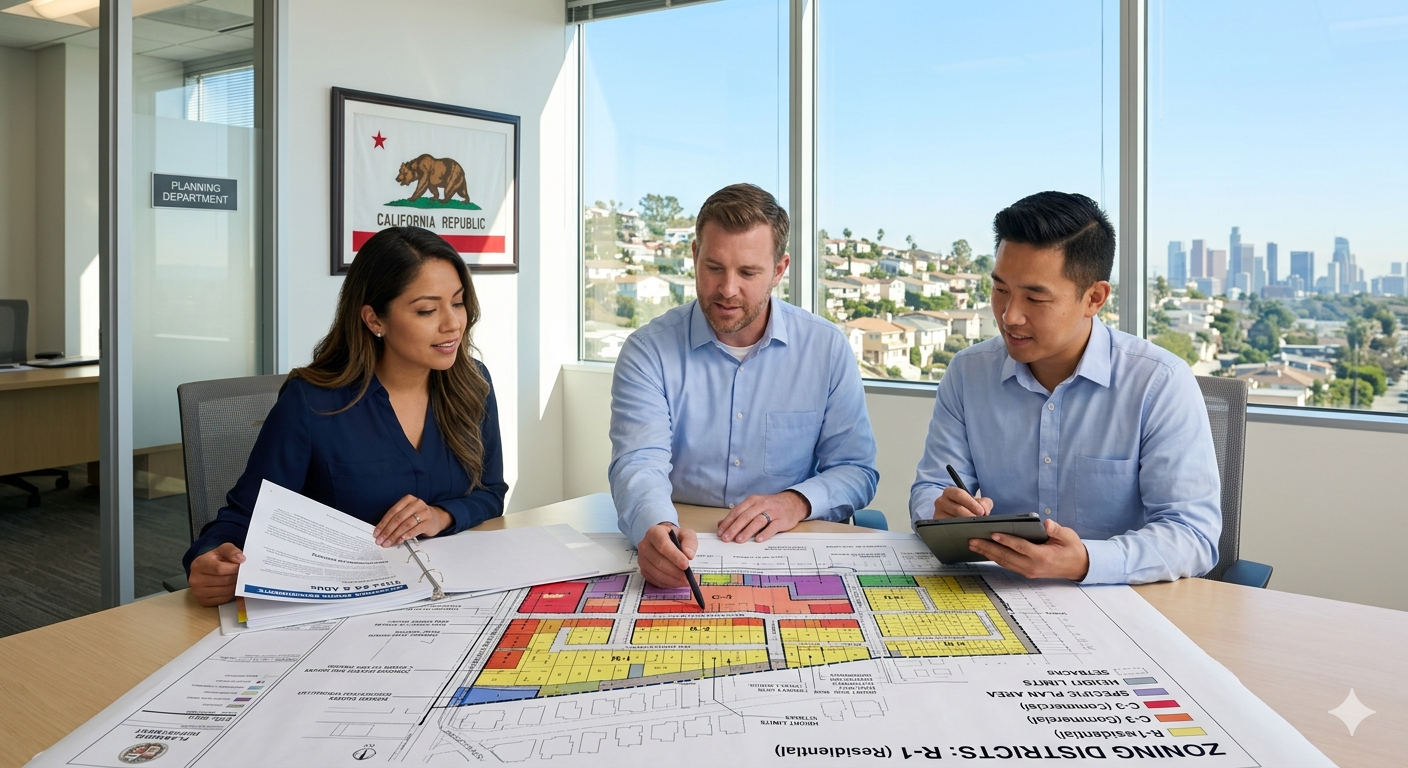
Zoning laws are local rules that determine what type of business activity can happen on a property. For a California dealership, zoning matters because the city or county wants to know whether that address is actually suitable for vehicle sales.
In plain English, zoning helps answer questions like:
- Can a dealership legally operate at this address?
- Can vehicles be displayed there?
- Can the business have the proper signage?
- Does the property fit the local rules for commercial activity?
In my view, this is where a lot of applicants get tripped up because they think a lease solves everything. It doesn't. A signed lease does not automatically mean the property is approved for retail vehicle sales or dealership use.
Every city can interpret and apply its zoning code a little differently. One city may be straightforward, while another may want site plans, inspections, sign review, parking review, or additional approval steps before you ever feel ready for the DMV side.
That is why I always think it is smart to start with one simple question before you commit to a property:
Is this address approved for dealership use or retail vehicle sales?
If the answer is unclear, that should be a red flag.
Why Zoning Matters More Than Most People Think
If I had to name one area where people lose the most time and money early in the process, zoning would be near the top of the list.
In my opinion, people tend to underestimate how much the physical location matters. They may be focused on taking the class, forming the business, getting bonded, or setting up their LLC or corporation, but if the property does not work, everything behind it gets harder.
What makes zoning so important is that it touches almost everything else:
- Your office setup
- Your sign approval
- Your display area
- Your inspection readiness
- Your local business licensing process
When the location is right, the rest of the process tends to feel much more manageable. When the location is wrong, every step starts turning into a negotiation or a delay.
Office Requirements for a California Dealership
In my view, the office requirement is one of the more straightforward parts of the process, but people still overthink it or underbuild it.
A California dealership generally needs a real, enclosed office that serves as the place where business is conducted. The office should look legitimate, usable, and connected to the dealership operation.
At a practical level, that usually means:
- A permanent enclosed structure
- Walls and a roof
- A locking door
- A desk and chair
- A place to store records
- Posted business hours
There is a tendency to assume there is some magic square footage number that automatically makes an office compliant. In my opinion, that is usually the wrong way to think about it. It is less about chasing an exact number and more about whether the office appears to function like a real dealership office.
I have found that what matters more is whether the office feels like an actual place to transact business and maintain records, not whether it looks fancy.
What Is Not an Office Requirement
One thing worth clearing up is that internet service and phone service are not the same as office requirements. They may be practical for running your business, but they are not the core physical requirement people should be obsessing over when setting up for compliance.
In my opinion, people sometimes spend too much time worrying about secondary items while missing the bigger issues like zoning, signage, and display area compliance.
Location and Office Use
The office also needs to be in the right kind of area. Most applicants are looking for a commercially zoned location, but what is allowed still depends on the local jurisdiction. Some commercial zones work well for dealerships. Some do not. Some may need additional review.
That is why I believe the safest move is always to verify the use with the local planning department before signing anything.
Front Door Sign Requirements
In my experience, signage is one of the easiest things to get wrong because people assume almost any sign will do. That is not how I would treat it.
If you want to avoid unnecessary issues, your front door sign should be treated like a real compliance item, not an afterthought.
Based on the standards you are working from, the front door sign should:
- Be at least 2 feet by 2 feet
- Clearly display the business name
- Be permanent in nature
- Be visible from at least 50 feet away
In my opinion, this is important because the sign is one of the fastest ways someone evaluating the site can identify whether the business location looks established and compliant. If the sign is too small, temporary, hard to see, or looks like it was thrown together at the last minute, that can create avoidable problems.
I think it is always better to be obvious and professional here. A clean, visible, permanently mounted business sign sends the right message and helps the property look like a legitimate dealership location.
Why Visibility Matters
The visibility requirement matters because the business should be identifiable from a reasonable distance. In practice, that means the sign should not be tucked away, partially blocked, or written so small that nobody could realistically spot it from the street or approach area.
If I were advising someone on this, I would tell them not to aim for the bare minimum look. I would aim for clarity.
Parking and Display Signs Must Be Permanent and at Least Hood Height
This is another area where I think specificity matters.
If the location includes a vehicle display or designated parking area for dealership inventory, the signs identifying that area should be permanent in nature and installed at least hood height.
That matters for a few reasons:
- The display area should look intentionally designated
- The signage should not appear temporary or removable
- The signs should be visible enough to clearly mark the area
- The site should look like an established business, not a makeshift setup
In my opinion, temporary yard signs, flimsy printed boards, or makeshift markers are the kind of thing that can make an otherwise decent setup look questionable. A permanent sign at least hood height helps define the dealership space in a way that feels much more credible.
I also think this is one of those details that separates people who are trying to properly set up their business from people who are just trying to get through the process as cheaply as possible.
Display Area Requirements
The display area is another major part of the overall setup. In my view, this is where the dealership starts to look like a dealership.
A compliant display area should be clearly defined, connected to the business location, and suitable for displaying vehicles in a way that is safe and professional.
Generally, the display area should:
- Be on the same property as the office or tied directly to the approved location
- Be clearly identifiable as dealership display space
- Be usable for actual vehicle display
- Not create safety or access issues
In my opinion, this is not just about having some extra space on a lot. It is about whether the property functions like a real dealership site. If the display area looks confusing, blocked off, makeshift, or inconsistent with normal business use, that can become a problem.
Surface and Condition of the Display Area
Most people I talk to already assume a display area should be paved, and I think that is the right mindset. Asphalt or concrete tends to look the most professional and the most consistent with what cities expect for this kind of use.
In my view, dirt lots, rough gravel, or unfinished surfaces are far more likely to create problems than polished, usable commercial surfaces.
Accessibility and Safety
The display area should also make sense from a safety standpoint. Vehicles should not block sidewalks, public pathways, or essential access areas. The lot should feel organized. There should be enough room to move vehicles without creating obvious safety concerns.
I also think it is smart to consider ADA issues, striping, fire lane concerns, and any city-specific parking or traffic flow rules. Even when those details are not the first thing an applicant thinks about, they can become part of the conversation once local review starts.
City Approval and Local Review
In my opinion, the city approval stage is where the process becomes very real.
People often think of the DMV as the main event, but before you get there, the city or county may want to see that the location itself is acceptable for the intended use.
Depending on the city, that can involve:
- Zoning verification
- Business license review
- Planning approval
- Sign review or sign permits
- Site plan submission
- Property photos
- Additional local forms or inspections
Some cities move relatively quickly. Others can take longer than people expect. That is why I think it is wise to start local review early instead of waiting until everything else is finished.
Questions to Ask the City Before You Commit
If I were looking at a new property, these are the types of questions I would want answered early:
- Is this address approved for vehicle sales or dealership use?
- Are there any special approvals required?
- What signage is required or restricted?
- Does the city require a site plan?
- Are there parking, display, or frontage requirements?
- Are there restrictions tied to the landlord, center, or property use?
In my opinion, the earlier you ask those questions, the fewer surprises you will have later.
Common Mistakes I See With Dealer Zoning and Property Setup
Signing a Lease Before Confirming the Use
This is probably the biggest one. People get excited about a location, the rent seems reasonable, and they move too fast. Then they find out the use is not approved or requires additional steps they never planned for.
Treating Signage Like a Small Detail
I do not think signage should be treated as a side issue. If the front sign is too small, not visible enough, or not permanent, or if the parking and display signs look temporary, that can weaken the whole setup.
Underestimating Local Variation
People often want a universal checklist that works everywhere in California. In my opinion, that mindset causes problems. The broad concepts may be similar, but local enforcement and interpretation can vary a lot.
Building a Setup That Looks Temporary
A dealership location should feel established. If the office, signs, or lot setup all look improvised, that can create more scrutiny than people expect.
My Opinion on the Best Way to Approach Dealer Zoning
If I were giving simple advice to someone starting from scratch, I would say this:
- Start with the address, not the paperwork
- Verify the zoning and use before signing anything
- Make the office look real and functional
- Handle signage like it actually matters, because it does
- Make the display area look intentional, organized, and permanent
- Expect local rules to matter
In my opinion, the people who get through this part of the process most smoothly are usually the ones who treat the setup like a real business from day one.
That means not trying to squeeze into a location that barely works. Not trying to shortcut the signage. Not hoping a temporary fix will be good enough. It is usually easier to do it right the first time than to fix a questionable setup after the fact.
Final Thoughts
If there is one point I would emphasize, it is this: your location matters more than most people think.
In my view, the office, the front sign, the display signage, the display area, and the city approval process all work together. When those pieces are aligned, the dealership setup starts to look solid. When one of them is weak, the rest of the process tends to get harder.
The front door sign should be at least 2 by 2 and visible from 50 feet. The parking and display signs should be permanent in nature and at least hood height. The office should be enclosed and functional, but internet and phone service should not be confused with core office requirements. And above all, local approval should never be assumed.
That is the way I would approach it, and in my opinion, that is the kind of approach that helps people avoid unnecessary mistakes.
Frequently Asked Questions
What zoning is usually needed for a California dealership?
In general, applicants are usually looking for a commercially zoned location that allows dealership or vehicle sales use, but the exact answer depends on the city or county. That is why it is important to verify the use directly with the local planning department.
Does a signed lease mean the location is automatically approved for a dealership?
No. In my opinion, that is one of the most common misunderstandings. A lease does not automatically mean the zoning or use is approved for vehicle sales.
What should a dealership office include?
A dealership office should be an enclosed, functional business space with basics like a desk, chair, record storage, and posted business hours. It should look like a legitimate place to conduct business.
Is internet or phone service a required part of the office setup?
No. Those may be practical for running the business, but they should not be confused with the main physical office requirements.
What are the front door sign requirements?
The front door sign should be at least 2 feet by 2 feet, permanent in nature, clearly show the business name, and be visible from at least 50 feet away.
What kind of parking or display signage should a dealership have?
Parking and display signs should be permanent in nature and installed at least hood height so the designated area is clearly identified.
Does the display area need to be paved?
In my opinion, a paved surface such as asphalt or concrete is usually the safer and more professional standard. Local requirements can vary, so this should still be verified with the city.
Why does city approval matter so much?
Because the city or county often determines whether the property is suitable for dealership use in the first place. If the local approval is not there, the rest of the process can become much more difficult.
What is the biggest mistake people make with dealership zoning?
In my opinion, the biggest mistake is signing a lease before confirming that the property is actually approved for dealership use.
What is the best first step before choosing a dealership location?
The best first step is to contact the local planning department and verify that the address can be used for dealership or vehicle sales activity before committing to the property.
Need Help Navigating the Process?
If you're trying to figure out whether a location makes sense for a California dealer license, it helps to look at the entire setup before you commit. California Dealer Academy can help you better understand the steps involved so you can move forward with more confidence.
Enroll Now