Disclaimer: This article is intended for educational purposes only and should not be considered legal or financial advice. Sales tax rates, rules, and requirements in California are subject to change and may vary depending on your location and specific situation. You should always verify all information directly with the California Department of Tax and Fee Administration (CDTFA) or a qualified professional before making any business or financial decisions.
Introduction
If you've ever tried to figure out sales tax in California, you already know it's not as simple as one flat rate.
In my opinion, this is where a lot of people — especially new dealers — get tripped up early.
They assume there's one statewide number, that it applies the same everywhere, and that it's easy to calculate. None of that is completely accurate.
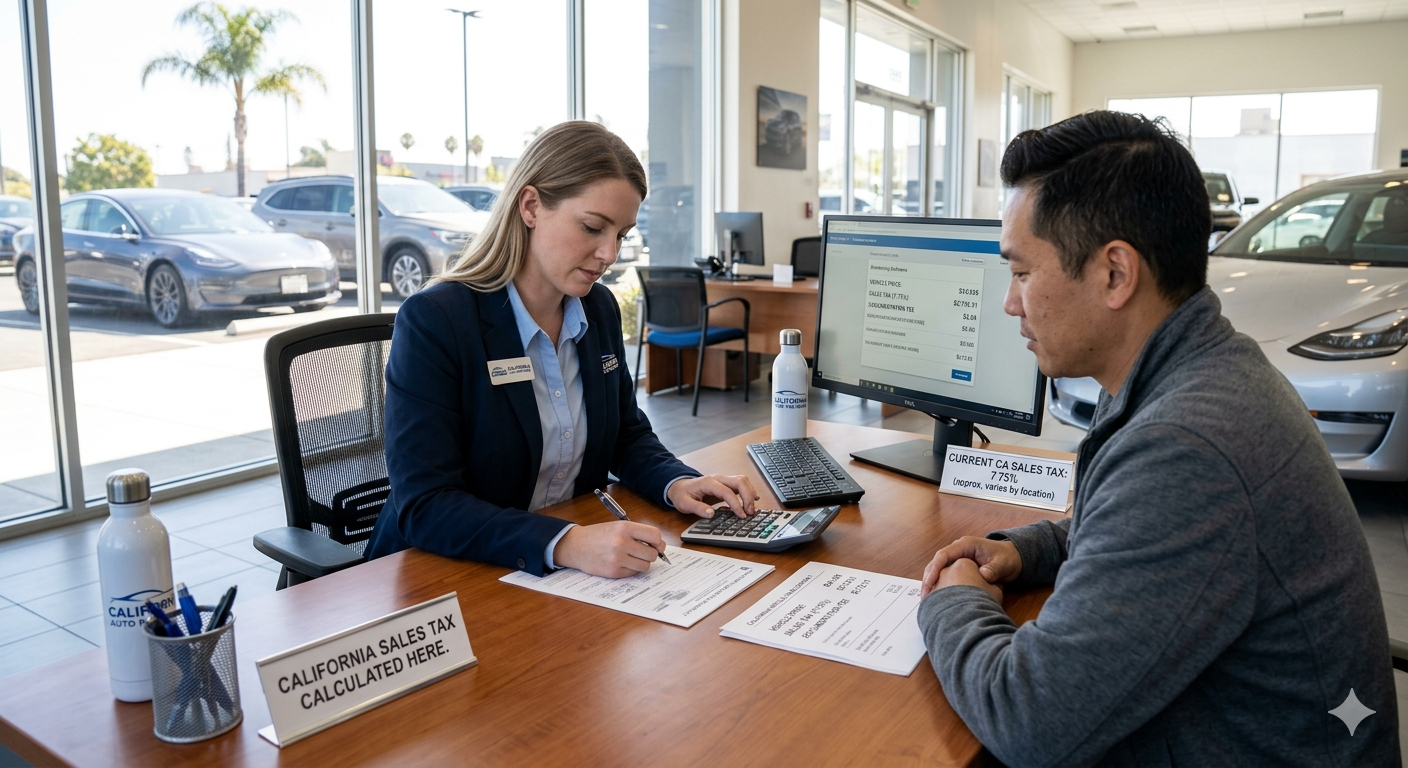
California sales tax is layered, location-based, and depends heavily on where the transaction is sourced.
If you're getting into the car business, this is something you need to understand early because it affects your deal structure, your customer expectations, and your compliance. If you're still working through the bigger licensing process, start with the California Dealer Playbook and the retail dealer license guide so you understand how taxes fit into the bigger picture.
What Is the Base Sales Tax Rate in California?
At the state level, California has a base sales tax rate of 7.25%.
This is where confusion starts.
People hear "7.25%" and assume that's what they'll pay. In reality, that's just the starting point.
Why Sales Tax Is Different Depending on Location
California uses what's called a district tax system. That means cities and counties can add additional percentages on top of the base rate.
So instead of one flat number, you get different total sales tax rates depending on the area.
If you're still building your dealership and trying to understand how everything connects, the DMV application guide and location and signage requirements guide help put this into context.
What Are District Taxes?
District taxes are additional local taxes approved by voters. They are used to fund things like infrastructure, transportation, public safety, and other local programs.
In my experience, this is one of the biggest reasons people get confused. Two customers in nearby areas can still have different tax rates because local taxes stack differently.
How Sales Tax Is Actually Determined in Vehicle Deals
In my opinion, this is the most important part for dealers.
People ask, "What's the sales tax rate?"
The better question is, "Which location determines the sales tax?"
California Residents
If the customer is a California resident, sales tax is generally based on the customer's registration address.
This means two customers can buy the same vehicle from the same dealership and pay different tax amounts.
Out-of-State Customers (Drive-Off Scenario)
If a customer lives outside California and drives off the lot in California, sales tax is generally based on the dealership's location.
This is one of the biggest areas where people get caught off guard.
If you're trying to understand how this fits into your overall dealership setup, I'd recommend reading what to do after you get your California dealer certificate.
What About Seller's Permits and Tax Compliance?
If you're operating as a dealer, sales tax ties directly into your seller's permit and reporting requirements.
A good next step is reviewing the California resellers permit for auto dealers guide, which breaks down the compliance side of collecting and reporting tax.
What Is Included in the Taxable Amount?
Sales tax is generally calculated based on the gross selling price, which can include the vehicle price and certain add-ons.
Some fees may be taxable and others may not. In my opinion, this is not something you want to guess on — always verify.
Use Tax vs. Sales Tax
California also uses use tax.
Sales tax is collected at the time of sale, while use tax applies when tax wasn't collected but is still owed.
This often comes into play with out-of-state purchases.
Common Sales Tax Mistakes I See
- Assuming there is one flat rate across California
- Using the wrong location to calculate tax
- Not verifying current rates
- Guessing instead of checking
Why Dealer Management Software Matters
Dealer Management Software (DMS) is a great way to navigate this space.
Tax rates change, district taxes stack, and deal structures vary. Trying to calculate everything manually leads to mistakes.
A good DMS helps:
- Calculate tax based on the correct location
- Reduce errors
- Keep deal structures consistent
- Improve customer confidence
In my opinion, this becomes necessary as your volume increases.
My Perspective on Sales Tax in California
If I had to simplify it, sales tax in California is not complicated — it's detailed.
The challenge is applying it correctly, verifying it consistently, and avoiding assumptions.
Conclusion
California sales tax starts at 7.25%, but the actual rate depends on location.
If the customer is a California resident, tax is generally based on where they live. If they are out of state and drive off the lot in California, tax is typically based on the dealership location.
Getting this right is critical for accurate pricing, compliance, and customer trust.
Frequently Asked Questions
What is the base sales tax rate in California?
The base statewide rate is 7.25%, but most areas are higher due to district taxes.
Why does sales tax vary in California?
Local districts add additional taxes on top of the base rate.
How is sales tax determined for vehicle sales?
It is generally based on the customer's registration address if they are a California resident.
What happens with out-of-state buyers?
If they take delivery in California, tax is usually based on the dealership location.
What is use tax?
Use tax applies when sales tax was not collected but is still owed.
What is the biggest mistake dealers make?
Assuming there is one flat tax rate across California.
How can I verify the correct tax rate?
By checking CDTFA tools or verifying the exact location.
Do I need software to calculate sales tax?
It is highly recommended to use Dealer Management Software to reduce errors.
Ready to Get Started the Right Way?
If you're getting into the car business and want help with setup, licensing, and compliance, start with the California Dealer Playbook and enroll in California Dealer Academy's DMV-approved pre-licensing course.
Enroll Now